
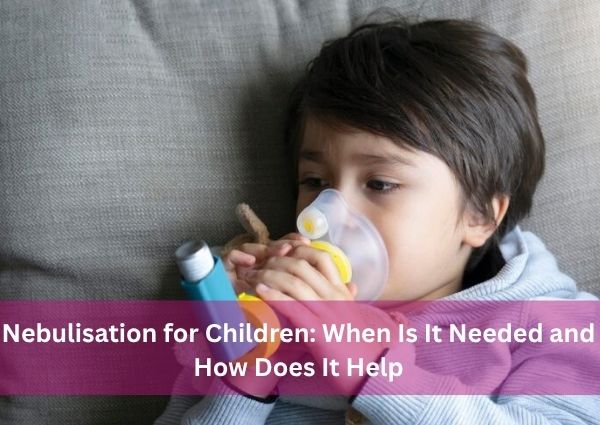
Breathing difficulties can be worrying for parents, especially when a child develops wheezing, persistent coughing, or difficulty breathing during an illness. In certain situations, a doctor may recommend nebulisation to help deliver medication directly into the airways. A nebuliser is a device that converts liquid medication into a fine mist that a child can inhale through a mask or mouthpiece.
Nebulisation is commonly used in children who have conditions affecting the airways, but it is not necessary for every cough or cold. The decision to use nebulisation depends on the child’s symptoms, age, medical history, and the underlying cause of the breathing problem. A healthcare professional should determine whether nebulisation is appropriate and which medication, if any, should be used.
When Is Nebulisation Needed for Children
Nebulisation may be recommended when a child has symptoms that require inhaled medication and is unable to use an inhaler effectively. It may be considered in certain cases of wheezing, asthma, or other respiratory conditions where medication needs to reach the airways.
Children experiencing airway narrowing may develop symptoms such as wheezing, chest tightness, persistent coughing, or difficulty breathing. In these situations, prescribed inhaled medicines can help relax the airway muscles or reduce inflammation, depending on the medication and the underlying condition.
Nebulisation can also be useful for young children who have difficulty coordinating an inhaler with their breathing. A nebuliser allows the child to breathe normally through a mask while the medication is delivered as a mist. However, the type and dose of medication should always be determined by a qualified healthcare professional.
It is important for parents not to start nebulisation simply because a child has a cough or cold. Many childhood respiratory infections do not require nebulised medication. Using medicines without medical guidance may be unnecessary or potentially harmful.
Parents should seek prompt medical attention if a child has severe difficulty breathing, bluish lips or face, unusual sleepiness, difficulty speaking or crying because of breathlessness, significant chest retractions, or other signs of serious respiratory distress.
How Does Nebulisation Help Children?
The primary benefit of nebulisation is that it delivers prescribed medication directly into the respiratory tract. Depending on the medication, this may help open narrowed airways, reduce airway inflammation, or manage specific respiratory symptoms.
For children with certain breathing conditions, inhaled medicines can act directly where they are needed. This can make medication delivery easier, particularly for younger children who may struggle to use conventional inhalers correctly.
During nebulisation, the child usually sits comfortably while breathing through a mask or mouthpiece. The treatment can take several minutes, depending on the device and medication. Parents should follow the healthcare professional’s instructions regarding treatment duration, frequency, cleaning, and medication dosage.
Keeping the nebuliser clean is particularly important. Equipment should be cleaned according to the manufacturer’s instructions to reduce contamination and maintain proper functioning. Masks and other components should also be handled appropriately and replaced when required.
Nebulisation should be considered part of an overall respiratory care plan rather than a treatment for every breathing-related symptom. Identifying the underlying cause of the problem is essential. A healthcare professional may evaluate the child’s symptoms, breathing pattern, medical history, and other relevant factors before recommending treatment.
Parents can also help children by ensuring they remain comfortable and hydrated when appropriate, avoiding exposure to tobacco smoke and other respiratory irritants, and following the prescribed treatment plan carefully. If symptoms worsen or do not improve as expected, medical advice should be sought rather than repeatedly administering nebulisation without assessment.
With appropriate medical guidance, nebulisation can be a useful method of delivering inhaled medication to children who need it. Understanding when it is appropriate, using the correct medication, and maintaining the equipment properly can help make treatment safer and more effective.
Dr. Dinesh Singhal provides the best healthcare treatment regarding nebulisation for children, offering professional guidance and appropriate care for pediatric respiratory concerns.
