
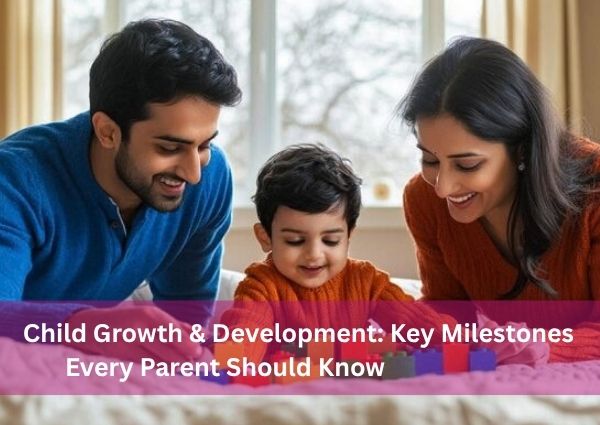
Child growth and development is a continuous process that begins from birth and progresses through infancy, early childhood, and school years. Every child develops at their own pace, but understanding common developmental milestones can help parents recognize how their child is progressing. Regular pediatric checkups are useful for monitoring physical growth, communication, movement, learning, and social development.
Growth generally refers to measurable physical changes such as height, weight, and head circumference, while development includes the acquisition of skills such as walking, speaking, interacting, problem-solving, and becoming more independent. Monitoring both aspects gives parents and healthcare professionals a broader understanding of a child’s overall wellbeing.
Important Child Growth and Development Milestones
During infancy, babies go through rapid physical and developmental changes. In the early months, babies gradually become more responsive to sounds, faces, and voices. They begin to smile, make different sounds, follow objects with their eyes, and develop better control of their head and body.
As babies grow, they typically become more active and curious about their surroundings. They may learn to roll over, sit with support and eventually independently, reach for objects, transfer toys between their hands, and respond to familiar people. Later in infancy, many children begin crawling or moving around in their own way, pulling themselves up, and using simple sounds or gestures to communicate.
During the toddler years, children generally become increasingly mobile and independent. They may begin walking, running, climbing, and using their hands for activities such as feeding themselves or playing with toys. Language development also progresses, with children gradually moving from single words to short phrases and more complex communication.
Social and emotional development is equally important. Toddlers begin recognizing familiar people, expressing preferences, showing affection, and developing stronger reactions to different situations. They also start learning simple instructions and gradually understand concepts such as sharing and taking turns.
During the preschool years, children continue developing their communication, coordination, learning, and social skills. They may become better at speaking in sentences, following instructions, drawing simple shapes, using utensils, dressing with some assistance, and participating in imaginative play. Their ability to interact with other children also develops as they learn to cooperate and communicate.
How Parents Can Support Healthy Development
Parents play an important role in creating an environment that supports healthy growth and development. Providing nutritious meals, adequate sleep, regular physical activity, and opportunities for play can contribute to a child’s overall wellbeing.
Talking, reading, singing, and responding to a child’s questions can encourage language and communication development. Young children learn through interaction, so parents can encourage curiosity by allowing them to explore safe environments and participate in age-appropriate activities.
Physical activity is also important as children grow. Outdoor play, walking, running, cycling, and age-appropriate sports can support physical coordination and strength. Activities involving drawing, building blocks, puzzles, and crafts can help develop fine motor skills and problem-solving abilities.
Regular pediatric checkups allow healthcare professionals to monitor height, weight, and other indicators of physical growth. Developmental assessments may also help identify whether a child is progressing in areas such as speech, movement, learning, behaviour, and social interaction.
Parents should remember that developmental milestones are general guidelines rather than strict deadlines. Children can reach individual milestones at different times. However, if a child loses a skill they previously had, shows a significant delay, or if parents have concerns about their child’s development, it is important to discuss those concerns with a qualified pediatric healthcare professional.
Early evaluation can help identify developmental or health concerns and determine whether additional assessment, guidance, or support may be appropriate. Regular monitoring also gives parents an opportunity to discuss nutrition, sleep, behaviour, immunity, school readiness, and other aspects of childhood health.
Supporting child growth and development is a long-term process that involves healthy routines, positive interaction, preventive healthcare, and regular professional guidance. By paying attention to developmental progress and maintaining regular health checkups, parents can help provide children with a strong foundation for healthy growth.
Dr. Dinesh Singhal provides the best healthcare treatment regarding child growth and development, offering professional pediatric guidance and comprehensive healthcare support for children’s healthy development.
